I often hear from parents, “Why didn’t they teach me the things I really needed to know in school, like how to do my taxes and responsibly handle money?” These parents obviously felt something was lacking in their education and don’t want their children have the same experience.
We all want our students to be successful, right? Fortunately, we have tools that can help us to help them. Formative assessment tools allow us to monitor our students’ learning and then use the information collected in real time to adjust our teaching. It’s a huge win-win for everyone! Formative assessment gives us a window into student understanding of the concepts they are being taught at both the class and individual level so that we as teachers can adjust our instruction to meet their needs.
For the last twenty-something years, I’ve been a teacher. I’m extremely proud of my vocation—I see the reactions I get when I tell people I teach, and I am always glad to get to talk about what I do. Most people know that teaching is not easy. It’s tiring, heart-wrenching, and frustrating at times, but it is also fun, energizing, and amazing at its best. Teaching has given me a purpose, a paycheck, and wisdom. I’d like to share with you some lessons I’ve learned from teaching that apply both in the classroom and the real world:
Topics: tips for teachers
Connect, Collaborate, and Share With An Online Educator Community
For even the most experienced teachers, back to school time is often filled with a blend of anxiety, hope, and excitement. A great deal of time is spent in the weeks prior to the start of school preparing classrooms, organizing resources, and planning lessons. This time of year can be especially complicated—and even overwhelming—when new instructional technology is introduced into the classroom.
Topics: MimioConnect, tips for teachers
Coaches are busy people. They need all the help they can get to save time and maximize their impact on their teams. And when it comes to competition, they also need to find any way they can to gain an edge over the other team.
My experience has been that some coaches are very comfortable with technology and understand how it can help their team. However, there are still many coaches who aren't familiar or comfortable with technology and still use a pencil and a clipboard. Although “old school” methods do work, coaches can make practices, games, and post-game analyses more effective by utilizing technology.
My generation of students has established the personal device trend, utilizing smartphones, tablets, and laptops in nearly all of our everyday tasks and interactions—both inside the classroom and out. With the number of apps expanding exponentially every day, I’ve surveyed a number of my high school friends and their siblings to compile a list of our top ten app picks for students:
Topics: Educational Software, Educational Apps, tips for teachers
The beginning of the year is the best time to set goals. It is not only a clean slate for all the kids and the teachers, but there is a great deal of openness to achieve and grow. The whole year is in front of us!
First, let’s make sure we understand why we should set goals. Goals are important not just for growth, but for clarity of priorities. Like Steven Covey told us in The Seven Habits of Highly Effective People, we should all begin with the end in mind. By doing this, we know where we are headed and where we want to go—it gives us a target for the rest of the year. As we make progress (or don’t), we can adjust the goals as we go. But unless we know a destination, we can’t start down a path.
Topics: education industry, Administrator Resources, tips for teachers
Coding has become part of the curriculum in many schools across the country—even for our youngest students in elementary schools. Coding has quickly grown over the past few years to be considered a fundamental basic literacy skill as it teaches students to be problem solvers and critical thinkers in a digital world. With an estimated 1.4 million programming job openings over the next 10 years, coding is one of the fastest growing job markets for our students as they move from school to the workplace.
Teaching coding in elementary schools is easy and so much fun. Over the past few years, many companies have created block coding apps, programs, robots, and more to help educators scaffold learning for our younger students. Block programming offers a simplified model of coding, with each block representing different commands. Block codes allow students to easily drag and drop a sequence of blocks together to create actions. Programs fall into the two main categories: Puzzle, where students use blocks of code to move an avatar through a series of mazes; and creation, where students drag and drop blocks of code to create their own program, story, or game.

Topics: Science Lessons, curriculum, 21st Century Skills, tips for teachers, Coding
We all want to create fun lessons and activities that make learning engaging and interactive for our students. However, we don’t want it to take forever or be overly complicated. That’s why I use MimioStudio™ classroom software, which conveniently works with any projector or interactive display. Whether you are using the MimioTeach portable IWB and your existing projector, an interactive projector, ProColor Display, etc., it just works. MimioStudio software is the powerhouse behind it all and is designed with the teacher in mind to be easy to use, intuitive, and powerful.
Topics: Educational Software, MimioStudio, tips for teachers
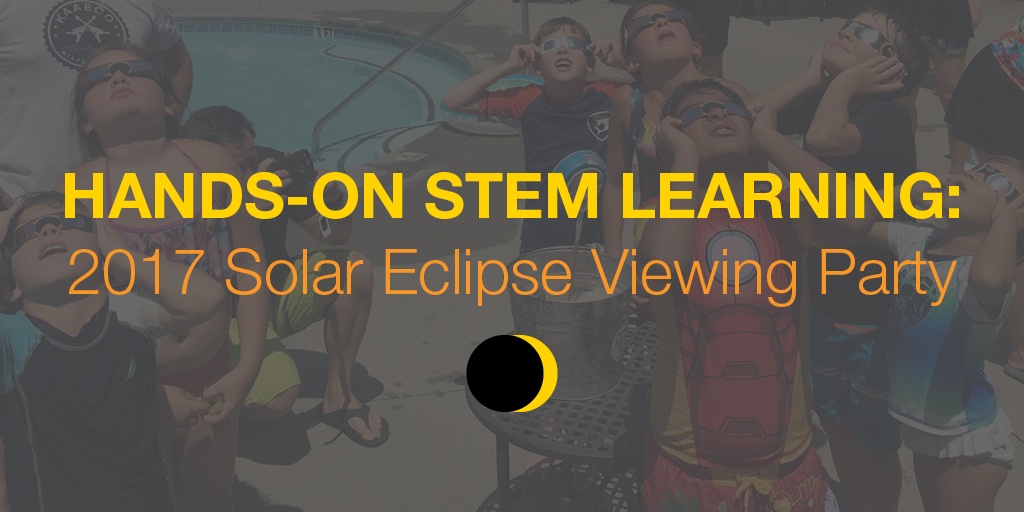
Hands-On STEM Learning: 2017 Solar Eclipse Viewing Party
On August 21, Boxlight hosted a solar eclipse viewing party for students from Fulton County Schools in Johns Creek, Georgia—and added an inquiry-based learning element to the event through use of the Labdisc portable STEM lab. Nearly two-dozen people attended the viewing party, with children ranging from elementary students to seventh graders along with executives from Boxlight.
Topics: Science Lessons, STEM Lessons, 21st Century Skills, STEM