With the current school year quickly coming to an end, you probably have a gazillion things to cross off of your end-of-year checklist. But because you’re a teacher, we’re sure there’s a little voice inside your head challenging you to prepare for back to school time right now. You know that if you do, your summer will be that much more relaxed and restorative.
Make Your Summer Break a Vacation with These End-of-Year Ideas
Topics: Education Technology, Educational Apps
Professional Learning Opportunities at Your Fingertips for Summer and Beyond
As summer approaches and the gifts of time and relaxation come into play, consider spending some of that time on professional learning opportunities that you might have missed during the hectic school year.
“The bad news is time flies. The good news is you're the pilot.” ‒ Michael Altshuler
Over the past 10 years in the world of education, life has not become simpler. We have increasing stacks of student data, growing lists of apps and tech ideas, a wall full of Pinterest pins, and parents and students with individual and widely varying needs. And as the end of the school year grows closer, we are even busier!
It can be overwhelming, but we’re here to offer some support. Take a look at these 11 time savers, which may help you simplify your day and free up time for other activities:
Topics: Educational Apps, tips fpr teachers
Let me begin by saying that summer should be summer – our students should have time to play and relax! Even though my wife and I are both educators, we believe that summer downtime is essential for all of our kids, regardless of their age. In our house, we “summer” hard. We stay up late, sleep in, often have no real plan for the day, and enjoy the freedom of summer.
That being said, once the summer rolls on for a little while, we usually find that our own kids start needing some engagement and some mental stimulation. We’ve found a number of ways to help maintain active brains over the long summer break. Here are eight ideas for your students and their parents.
Topics: curriculum, Project-Based Learning
Class-Wide Collaboration with Ed Tech: Part 2 - IWBs, Digital Displays & Web Tools
Last week we discussed why accustoming students to whole-class collaboration is critical to their future success in the workplace, and looked at the ways that mobile applications can facilitate that type of classroom collaboration.
Today we’ll consider other types of ed tech: interactive whiteboards, digital displays, and Web 2.0 tools.
Topics: Educational Software, Education Technology, Classroom Collaboration, Educational Apps, Curr
Class-Wide Collaboration with Ed Tech: Part 1 - Mobile Applications
It has become clear that student collaboration is now an important focal point of modern education. The Common Core standards found in many states require that students participate in a diverse range of collaborative activities. That’s because teaching students collaborative skills has become paramount to their success in the 21st century global economy.
Collaboration Creates Tomorrow's Successful Workforce
When today’s students enter the workforce, they will be asked to collaborate with others, both in person and via technology. To prepare students to perform their future jobs successfully, many schools have adopted curricula, materials, and lessons centered on the concept of student collaboration. Programs such as College Prep Math (CPM), which requires students to work and to solve problems together as a team, are becoming more common in schools across the country and around the world.
Topics: Education Technology, MimioMobile, Educational Apps

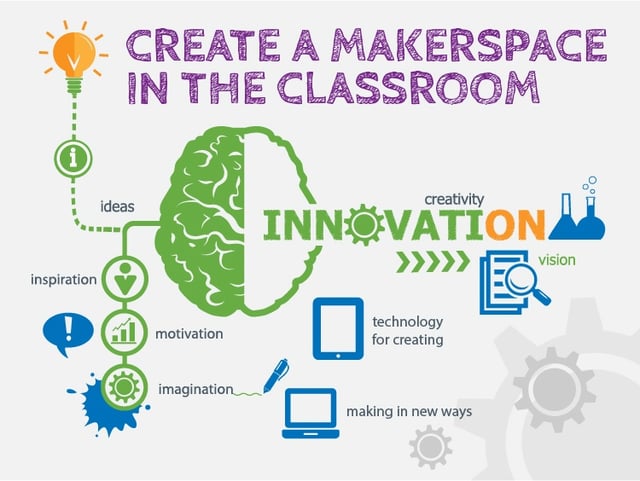
America has always had a culture set on dreaming up possibilities and then taking action to make them happen. I believe that the amazing innovation we have seen in the United States (and, in some cases, don’t even know about yet) is due to the “maker” mentality. Because the art of making is inherent to the very fabric of our culture, it’s central to 21st learning.
Childhood has long been a time when young minds are allowed – indeed, encouraged – to play and “make.” It’s important to understand that allowing students to be makers opens the doors to both personalized and authentic learning.
The current Maker Movement in education puts greater emphasis on allowing students to imagine, envision, create, innovate, play, formatively learn, experiment, collaborate, share, and – most of all – dream of possibilities. Creating a classroom makerspace seems to be a natural progression in today’s schools.

Topics: Lessons, Activities, curriculum, The Maker Movement
Liven Up the End of School Year with Problem-Based Learning
The school year is winding down and final grades are being entered. Field day is right around the corner, and students are starting to get more restless than usual. For teachers, this is a hard time of the year. Any teacher worth her salt wants to maximize learning for every minute of every day. At the same time, there is a limit to how much can actually be assessed accurately during these final few days.
To lend a helping hand, over the few weeks we’ll be featuring ideas and planning tips for making the end of the year fun, memorable, and engaging for students. Today let’s discuss problem-based learning (PBL), a student-centered pedagogy in which students learn about a subject through the experience of solving an open-ended problem. Via the PBL format, students absorb both thinking strategies and domain knowledge.
Topics: Activities, curriculum, tips fpr teachers, Project-Based Learning
12 Ways to Rock the Next Generation Science Standards with Cross-curricular Projects
The Next Generation Science Standards were designed to be "rich in content and practice, arranged in a coherent manner across disciplines and grades to provide all students an internationally benchmarked science education." In practice, the NextGen Standards cover more than the science disciplines – the directives integrate all subject areas. The standards are so cross-curricular, you might sometimes think you’re reading a writing prompt for a language arts class or as a math story problem. Their nature makes them ideal for teaching in a project-based learning environment, where the goal is to synthesize curricular topics into one global learning experience. Nexgenscience.org provides a valuable resource on cross-curricular classroom sample tasks to get you started.
There are many ways to bring Science Standards into other disciplines and lessons. Think about presenting the science activities that are aligned to the Next Generation Science Standards as cross-curricular projects that will deepen student learning and engagement. For examples, consider the following 12 projects.
Topics: Science Lessons, STEM Lessons, curriculum
How Google Docs Can Help You Work with Student Data to Improve Instruction
When it comes to working with student data, most tech-savvy educators know how powerful spreadsheets can be. A basic knowledge of formulas and functions makes it possible for a teacher to generate quality information, reports, and charts. But the typical teacher grade book doesn’t allow for much data manipulation. Student scores on particular assignments in a grade book don’t necessarily show teachers whether students have mastered the material.
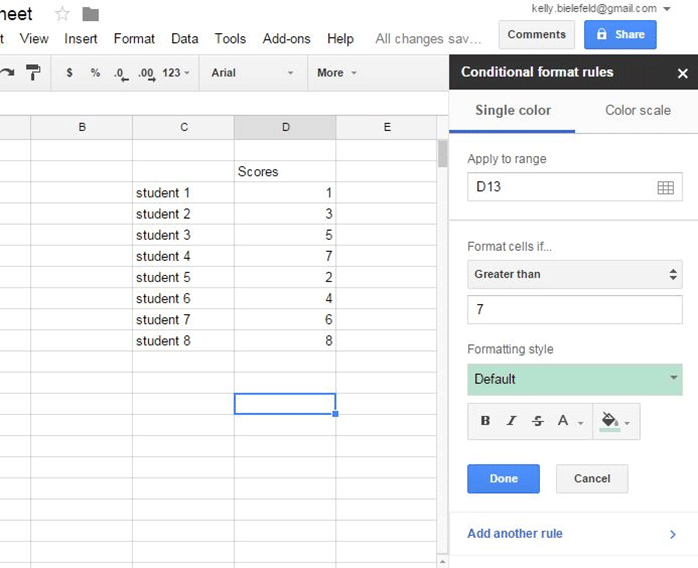
While grade books are probably here to stay, there is an additional tool that can help teachers gather more information from their students’ grades, including student mastery and testing information. It’s the Conditional Formatting function in Google Sheets.
Topics: classroom assessment, curriculum, Google Classroom